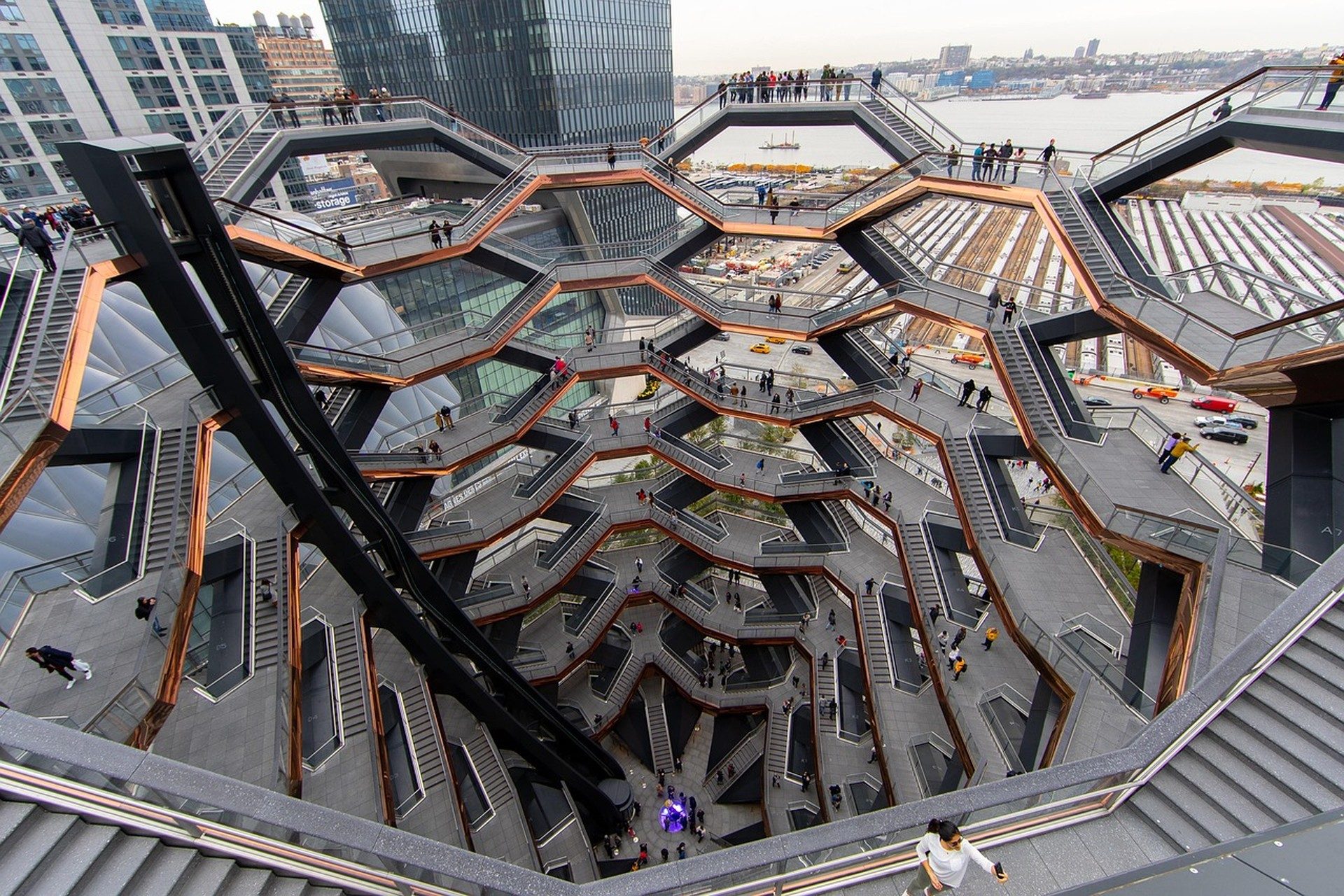
Hudson Yards has become the newest test of how a single mixed-use district can move an entire city’s leasing cycle. The newyork mkt hudsonyards lease expirations comparison now sits at the center of allocator conversations because the first major wave of original leases signed after the 2010s construction boom will begin rolling off in the second half of this decade. Understanding that pipeline requires looking outward as much as looking at the High Line and the West Side rail yards.
Foundation tracks these expirations not as isolated lease events but as a coordinated signal that can reprice entire floors of Class A space, shift absorption patterns, and force capital-structure decisions years before the actual termination dates. The comparison with other global mega-projects shows which local markets absorb the shock and which amplify it.
Scale of the First Hudson Yards Expiration Cluster
The earliest leases at the core Hudson Yards towers were written with ten- to fifteen-year terms that clustered around the same calendar windows. When those agreements end, roughly several million square feet of office and retail space will hit the market inside a relatively narrow band of years. Landlords face the choice of re-leasing at current asking rents, offering large free-rent packages, or converting floors to alternative uses. Tenants, for their part, gain negotiating leverage precisely because so many comparable spaces become available at once.
Public data releases from the City of New York already show elevated pre-leasing activity in neighboring Midtown West buildings as companies position themselves ahead of the wave. The pattern is classic: early movers lock in longer terms at moderate rents while later movers confront a thinner set of options and higher concession demands.
London Canary Wharf’s Earlier Rollover Experience
Canary Wharf faced a similar concentration of lease ends after its first two decades of rapid build-out. The British market absorbed the volume through a combination of aggressive re-branding, transit upgrades, and a willingness to accept lower rents temporarily in exchange for longer commitments. Vacancy spiked, yet the district retained its status as a global banking hub because the surrounding infrastructure kept improving even as individual leases turned over.
America observers note that Hudson Yards lacks the same depth of nearby residential density that eventually stabilized Canary Wharf. Without that residential buffer, pure office rolls can create sharper temporary imbalances. The lesson is not that Hudson Yards will empty, but that the velocity of re-leasing will depend heavily on how quickly complementary amenities and housing continue to fill in around the towers.
Tokyo Mixed-Use Towers and Staggered Reset Timing
Tokyo’s large mixed-use projects deliberately stagger lease maturities across office, retail, and hotel components so that no single year becomes an expiration cliff. Japanese landlords also tend to renew existing tenants at modest escalations rather than chase peak market rents. The result is lower volatility and more predictable cash-flow streams for the debt that sits under those assets.
Hudson Yards, by contrast, still carries a higher share of original leases that terminate close together. Adopting even modest staggering practices for new leases written today would reduce the amplitude of the next cycle. Global capital already prices that difference into required returns: Tokyo assets often trade at tighter spreads precisely because their rollover risk is engineered to be smoother.
Debt Structures That Travel With Expiring Space
Lease expirations rarely travel alone. Many of the original construction and permanent loans at Hudson Yards were sized against the cash flows of those first leases. As the leases mature, the debt itself approaches refinancing windows. The interaction creates a double pressure: space must be re-leased at rents that support new underwriting, and capital markets must be willing to extend or replace the mortgages.
Readers interested in the broader capital-markets backdrop will find parallel analysis in Manhattan Real Estate in 2026: Office Dislocation and the Debt Maturity Wave. That piece shows how office dislocation and debt walls can reinforce each other. Hudson Yards simply concentrates both forces inside a few city blocks.
For a deeper look at refinancing sequences across trophy assets, Foundation also maintains the companion study Trophy Asset Refinancing Ladders: Global Market Comparison, which places Hudson Yards ladders alongside those of London, Singapore, and Frankfurt.
Absorption and Cost-Curve Signals Across Manhattan
When large blocks come free, absorption rates become the clearest early-warning metric. Strong absorption indicates that the market can clear the space without extreme concessions. Weak absorption forces landlords to compete on price, free rent, and tenant-improvement allowances. The regional cost curve then shifts: owners of older Midtown towers must decide whether to match Hudson Yards economics or accept longer vacancy.
Detailed absorption math appears in the Foundation note Manhattan Condo Absorption Rates: Regional Cost Curve Comparison. Although that study focuses on residential product, the same clearing-price logic applies to office floors once the volume of available space rises sharply.
Cyber and Operational Risks During Mass Turnover
Mass lease turnover also multiplies operational risk. Each new tenant brings its own systems, access credentials, and data-sharing requirements. Property-management platforms must scale identity management and network segmentation at the same time that physical construction crews are rebuilding interiors. Scenario planning for those cyber exposures is covered in Cybersecurity for Property Management Platforms: Scenario Planning Through 2030.
Owners who treat cybersecurity as a post-lease afterthought discover that insurance underwriters and lenders increasingly treat it as a core underwriting item. Integrating security architecture into the re-leasing process therefore becomes part of the global comparison: markets that handle the digital hand-off cleanly retain higher valuations.
Credit Metrics and CMBS Implications
Commercial mortgage-backed securities that include Hudson Yards collateral will face rating scrutiny as the expiration dates approach. Special servicers monitor lease-up progress, rollover reserves, and tenant credit quality. Any sustained delay in re-leasing can push delinquency metrics higher even if the underlying real estate remains prime.
Allocators who want city-pair context should review CMBS Delinquency Trends America: City Pair Analysis for Allocators. That analysis places America delinquency paths beside those of Chicago, Los Angeles, and Boston, showing how concentrated lease events can move city-level statistics faster than gradual economic softening.
Macro researchers can also consult the latest IMF publications on commercial real-estate stress tests; the Fund’s frameworks treat lease-duration concentration as a distinct risk factor alongside interest-rate and vacancy shocks.
Policy and Research Inputs That Shape the Next Cycle
Federal and municipal research continues to inform how cities prepare for large-scale lease transitions. HUD User research provides longitudinal data on mixed-use absorption that helps model residential spillover demand around Hudson Yards. Meanwhile, the Federal Reserve Bank of New York publishes regional credit conditions that signal whether banks will remain willing lenders when the refinancing wall arrives.
Foundation’s own ongoing coverage lives inside the America Real Estate Market Trends archive, where successive lease-expiration updates are posted as new data appear. Readers who need quick clarification of terms can consult the site’s FAQ (frequently asked questions) page, and the broader Blog collects practitioner commentary that does not fit the longer research format.
The newyork mkt hudsonyards lease expirations comparison ultimately reveals that scale alone does not determine outcomes. Staggering of maturities, quality of surrounding infrastructure, flexibility of capital structures, and speed of digital onboarding all decide whether a concentrated pipeline becomes a temporary soft patch or a multi-year valuation reset. Hudson Yards still has time to write new leases that avoid repeating the cliff-edge pattern. Global peers have already demonstrated which tools work. The remaining variable is whether America owners and tenants choose to use them.
Related Foundation reading: Foundation Israel.
Timeless Value. Perpetual Legacy.