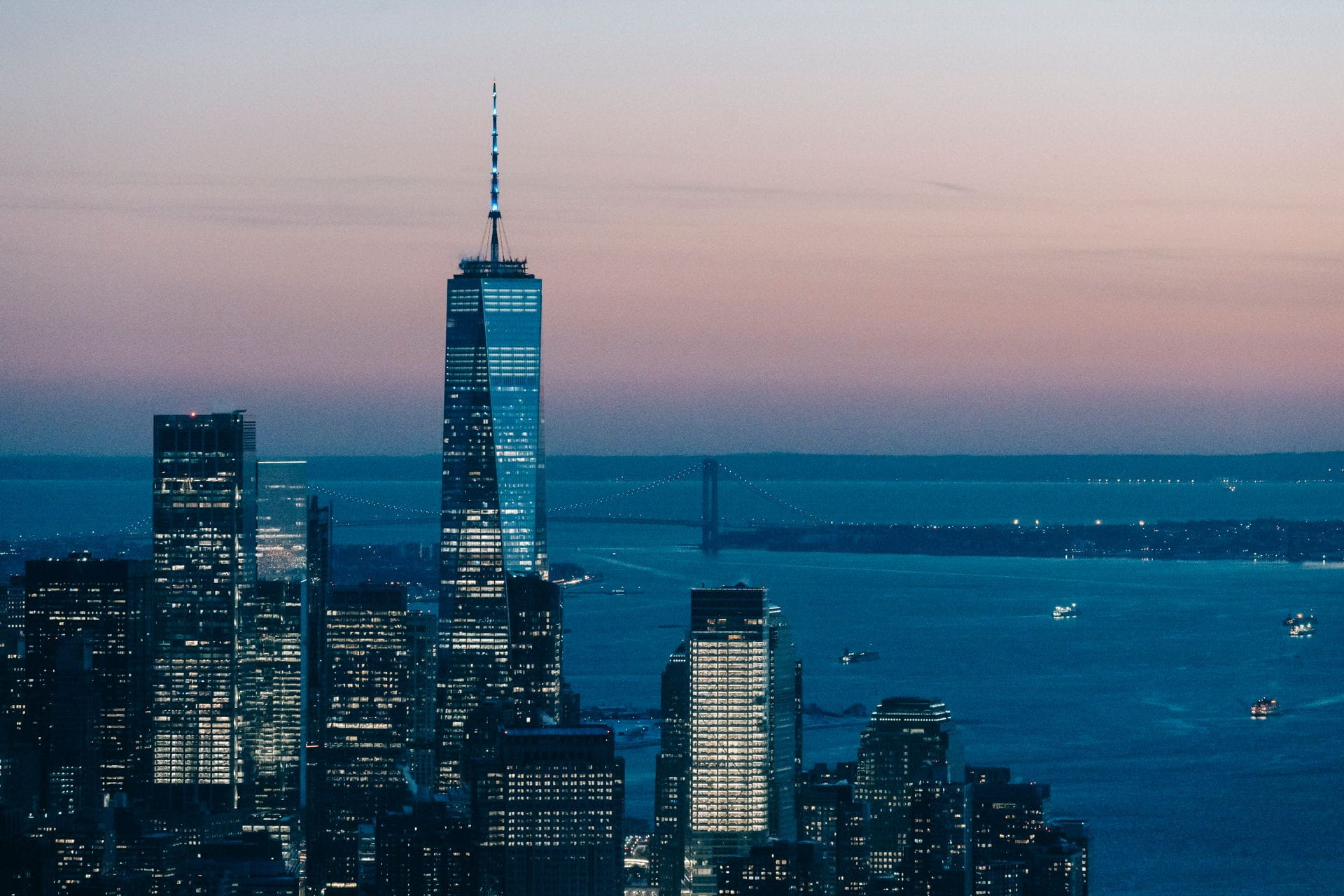
Technology demand commercial NYC has become the force that quietly rearranges which blocks fill and which stay empty. Cloud platforms, artificial intelligence training clusters, and media streaming firms need more power, cooler air, and lower latency than a traditional bank or law firm ever required. That shift is already visible in leasing velocity, land pricing, and the types of buildings that can still compete.
Servers Competing With Finance for Floor Space
Large technology tenants now bid against long-standing financial firms for the same Midtown plates. A single machine learning lab can consume electricity equal to several hundred ordinary offices, so landlords who once marketed prestige views now market transformer capacity first. The result is a reordering of desirability: a slightly older tower with robust risers can out-earn a glass trophy asset that cannot deliver enough megawatts.
Occupiers also measure latency to major internet exchanges. Buildings within a few blocks of those exchanges attract denser rents because every millisecond matters for trading algorithms and content delivery. This premium is no longer limited to financial firms; it has become a core underwriting metric for any firm that ships large data sets. Readers who want the wider picture on capital allocation can review the Infrastructure Technology archive for parallel case studies.
Midtown Corridors Reshape Around Compute Needs
Certain avenues between Thirty-fourth Street and Fifty-seventh Street have begun to specialize. Owners along these stretches are gutting older floors to install raised flooring, cold-aisle containment, and redundant chillers. The conversion costs are high, yet the rents that follow are higher still when a hyperscale operator signs a long-term commitment. Hyperscale Data Centers Are Arriving in America. Here Is What Changes shows how those contracts alter cash-flow timing for owners and lenders alike.
Neighborhood character shifts as well. Ground-floor cafés that once served equity traders now serve systems engineers on twenty-four-hour rotations. Sidewalk loading docks handle more equipment crates than ordinary office furniture. Zoning overlays still classify many of these towers as commercial, yet their day-to-day function looks closer to a light industrial plant than a white-collar headquarters.
Electricity Access Determines Winning Locations
Power is the new location score. Con Edison and other utilities maintain long queues for new service upgrades, so a site that already possesses spare capacity can close a lease months faster than a competitor waiting for grid work. Power Availability: The Hidden Bottleneck in America Data Center Development explains why some well-located parcels remain undeveloped while others fill overnight once substations are confirmed.
Owners now commission independent load studies before marketing a building. Those studies become marketing exhibits that replace glossy lobby photographs. Prospective tenants share the reports with their own engineers and often walk away if the numbers fall short. Public market filings filed with the US Securities and Exchange Commission increasingly list power contingency as a material risk factor for real-estate investment trusts that hold America assets.
Former Warehouses Become Dense Compute Hubs
Large floor plates once used for apparel storage or printing plants now house rack after rack of servers. Ceiling heights of twenty feet and concrete slabs able to carry heavy loads make these structures natural candidates. Redevelopment usually retains the shell while replacing every internal system: generators, switchgear, fiber entry vaults, and cooling towers.
Because industrial zoning already permits heavier electrical gear, approvals move faster than they would in a pure office district. How AI Compute Demand Is Driving America's Infrastructure Boom maps how several such conversions have pulled speculative capital into districts that were considered secondary only five years earlier. Land-price indexes compiled by HUD User research now show measurable upticks in those same industrial pockets.
Tech Occupancy Screens Rewrite Lease Standards
Standard form leases no longer fit. Technology tenants insist on clauses that guarantee power density, cooling redundancy, and the right to install additional fiber without landlord delay. Exit rights trigger if measured latency exceeds an agreed threshold. Landlords respond with higher base rents and with recovery of capital improvements through separate electricity surcharges.
Brokers have begun circulating scorecards that rank buildings on technical readiness rather than finishes. A property that scores well on those cards can command a waiting list even while Class A vacancies remain elevated nearby. Manhattan Real Estate in 2026: Office Dislocation and the Debt Maturity Wave places this technical bifurcation against the broader wall of maturing loans, showing why owners of obsolete towers face pressure that modernized assets largely escape.
Investors Follow AI Driven Real Estate Flows
Institutional capital tracks headcount growth in artificial intelligence labs more carefully than it tracks total employment. When a major research group announces a America expansion, land prices within a short trucking radius of that announcement rise within weeks. AI Infrastructure Demand Is Reshaping America's Real Estate Map documents the spatial pattern of those announcements and the corresponding transaction velocity.
Debt markets have adjusted as well. Lenders now request independent engineering reviews of power and cooling systems before underwriting. Loan-to-value ratios shrink for buildings that lack documented upgrade paths, while fully powered assets can still obtain competitive terms. Macro forecasts from IMF publications note that similar compute-driven real-estate pressure is appearing in other dense financial centers, confirming that America’s experience is part of a larger capital reallocation.
Peripheral Districts Absorb Spillover From Core Markets
When Midtown sites fill or become too expensive, operators look for large contiguous parcels slightly farther from the densest corridors. These locations still need fiber diversity and dual utility feeds, yet land costs remain lower and municipal incentives sometimes sweeten the economics. Data Center Development in America: What Institutional Investors Should Know outlines the due-diligence checklist that sophisticated buyers apply before committing capital in those secondary nodes.
Community boards and planning staff now see more applications for electrical equipment yards and generator farms. The applications often spark public debate over noise and diesel fuel storage, yet many projects still advance because they bring tax base and construction jobs. Clear answers to common resident questions appear in the site’s FAQ (frequently asked questions) so that neighborhood discussions can stay fact-based rather than speculative.
Overall, technology demand commercial NYC has turned commercial real estate into a competition measured in megawatts and milliseconds rather than mere prestige address. Owners, lenders, and planners who understand that metric keep their assets relevant; those who ignore it discover empty floors faster than they expect.
Readers comparing notes on How Technology Demand Is Redrawing America s Commercial in America should keep one dated source list and one named owner for updates so the next review of How Technology Demand Is Redrawing America s Commercial does not restart definitions. Article reference newyork-075.
If two teams disagree about How Technology Demand Is Redrawing America s Commercial, write the disagreement in one paragraph with the evidence each side trusts before any money language expands around How Technology Demand Is Redrawing America s Commercial. Article reference newyork-075.
A short refusal note for How Technology Demand Is Redrawing America s Commercial should say what was parked, why it was parked, and who can reopen the file on How Technology Demand Is Redrawing America s Commercial after new facts arrive in America. Article reference newyork-075.
Related Foundation reading: Our approach and Foundation Israel.
Timeless Value. Perpetual Legacy.